 My Country School Diary: An Adventure in Creative Teaching by Julia Weber Gordon
My rating: 4 of 5 stars
On 5 June 1936 Julia Weber begins a diary of her "adventure in creative teaching". The diary covers four years, in which time we get to know 28 to 33 students who range from age 5 to 14 (depending on the year). Ho-hum--another teaching story (you might be thinking). I thought I was going to be able to give this a quick skim. I soon found myself drawn in to the fascinating approach to learning that this woman was implementing. The results this method produced are astounding.
The inspiring aspect of her work is that it is duplicatable -- not the curriculum but the process. When the goal of education is absorbing a "core" curriculum (which is in the limelight at present) this more "democratic" (her word) approach is not feasible. However, if the objective is to raise youth who are able to work together, solve problems, learn HOW to learn, gain better social skills, become more involved in their community, have improved relationships even at home -- well, this model was proved to produce these very beneficial results.
Her postlude shows that this type of learning environment cannot thrive in a vacuum. Even children who have been successful through learning this way for a period as long as four years cannot maintain the process without a teacher who can guide them through it.
Her successor had a promising resume, had the opportunity to work with the author and was assisted in creating a teaching plan. Sadly, in less than a month the new teacher reverted to a more orthodox protocol and it wasn't long before all that was hard won was lost. The author writes, "Children, being immature, need a guide."
Anyone working with children will appreciate the author's journey -- the plans, trials, errors, solicitations for help and input, use of mentors, insights, and narration of her charge's successes. (When I say "successes" I really mean their learning journeys -- and journey is an apt description.)
Here's an example (found on page 44): Dec. 4 These children need to initiate and plan their activities because interest and purpose are essential to wholesome development. Through the Helper's Club and through the conferences the children are already beginning to work and plan with purpose. Today we took another step in this direction. Each morning I have had the plans for the day on the blackboard. We would discuss these plans the first thing. This morning, however, I thought I would have the children plan their own day. We listed orally all the things that need to be done and then we organized them on the blackboard."
I was able to read this book by borrowing it through the inter-library loan service of my library. It came from a state university library. The "date due" slip informs me that it was purchased in late 1951. It was borrowed twice in that year and once a year later. It sat on the shelf for a full seven years. Then it waited another eleven years before it was borrowed again. It waited eighteen years to be borrowed again. It was checked out four times that year (1988), possibly by the same person. Two years later it was borrowed twice. Twenty-three years after that I borrowed it. So, in nearly 60 years it has been borrowed only twelve times! I am amazed it was still there! Most libraries these days do not have the luxury of keeping "shelf sitters".
We, as library users, make a huge impact on what is purchased and what is kept. We need to "be players"!
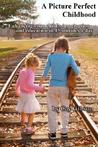 A Picture Perfect Childhood by Cay Gibson
My rating: 4 of 5 stars
Reading-aloud enthusiasts, moms, teachers, and librarians will love Cay's journey of discovery as she gained a love and appreciation of what picture books could do for her and her family. She then discovered story hours at the library, appreciating how librarians modeled better ways to read aloud.
She shares other people's journeys as well, infusing all with quotes and anecdotes. She has become a hub for getting the word out about what can be done with just 15 minutes of reading aloud every day.
She provides many recommendations for using books with children from pre-school age thru teen years. Study units, cooking, traveling, favorite authors and illustrators, and so forth.
I posted a sample on one of my blogs -- http://www.projectpercy.blogspot.com/
I put both of these books under PERSONAL DEVELOPMENT because one of my life "subjects of inquiry" is "Education" (my undergraduate degree is in Elementary Education) and among my 101 goals is to create curriculum. It is on my bucket list to do and whether or not it is ever used remains to be seen.
Along these same lines is this book on education.,,
 A Montessori Mother by Dorothy Canfield Fisher
My rating: 3 of 5 stars
I find anything Montessori to be fascinating. This particular study of Montessori methodology, written by an articulate American who visited a "Casa dei Bambini" or "Children's Home" circa 1912, provides an opportunity for us to observe this phenomena as it was presented in its infancy to a curious public.
The copy I read was obtained through inter-library loan from the Boise State College and conveniently had some read underlined passages throughout. I will share some of these.
p.2 ...but to be responsible to God, to society, and to the soul in question for the health, happiness, moral growth, and usefulness of a human soul, what reflective parent among the whole army of us has not had moments of heartsick terror at the realization of what he has been set to do?
p.17 "The children can come and find me if they need me."
p.30 The freedom accorded them is absolute, the only rule being that they must not hurt or annoy others, a rule which, after the first brief chaos at the beginning, when the school is being organized, is always respected with religious care by these little citizens; although to call a Montessori school a "little republic" and the children "little citizens," gives much too formal an idea of the free-and-easy, happily unforced and natural relations of the children with each other.
p.32 "But what do you do, with all this fine theory of absolute freedom, when a child IS naughty?"... I was told then that the health of such a child is looked into at once, such perverted violence being almost certainly the result of deranged physical condition. If nothing pathological can be discovered, he is treated as a morally sick child, given a little table by himself, from which he can look on at the cheerful, ordered play of the schoolroom, allowed any and all toys he desires, petted, soothed, indulged, pitied, but (of course this is the vital point) severely let alone by the other children, who are told that he is "sick" and so cannot play with them until he gets well. This quiet isolation, with its object-lesson of good-natured play among the other children, has a hypnotically calming effect, the child's "naughtiness" for very lack of food to feed upon, or resistance to blow its flames, disappears and dies away.
p.40 For although the Montessori school furnishes the best possible practical training for democracy, inasmuch as every child learns speedily first the joys of self-dependence and then the self-abnegating pleasure of serving others, it is also preparing the greatest possible amelioration of our present-day democracy, by counteracting that bad, but apparently not inevitable, tendency of democracy to a dead level of uniform and characterless mediocrity. The Casa dei Bambini proves in actual practice that even the best interests of the sacred majority do not demand that powerful and differing individualities be forced into a common mould, but only guided into the higher forms of their own natural activities.
p.40-41 No greater tribute to the broadly human and universal foundation of the system could be presented than this inevitable tendency in visitors to see in the differing childish activities the unchaining of great natural forces for good which have been kept locked and padlocked by our inertia, our short-sightedness, our lack of confidence in human nature, and our deep-rooted and unfounded prejudice about childhood, our instinctive, mistaken, harsh conviction that it will be industrious, law-abiding, and self-controlled only under pressure from the outside.
p.48 I am addressing an audience no more scientific than I am, an audience of ordinary, fairly well educated American parents.
p.49 ... no human being can be educated by anyone else. He must do it himself or it is never done.
p.57 ...up to the age of six, children need to have their vision reinforced by touch if, without great mental fatigue, they are to get an accurate conception of the objects about them.
p.103 She (the Montessori mother) is to remember constantly that the Montessori exercises are neither games to amuse the children (although they do this to perfection), nor ways for the children to acquire information (although this is also accomplished admirably, though not so directly as in the kindergarten work). They are, like all truly educative methods, means to teach the child how to learn.
p.133 How many ...mothers, dressing and undressing, washing and feeding and regulating their children, as though they were little automata, because "it's so much easier to do it for them than to bother to teach them how to do it," are reducing the little ones to a state of practical paralysis? ... The too loving mother, the one who is too competent, the one who is too wedded to the regularity of her household routine, the impatient mother, the one who is "no teach and never can tell anybody how to do things," all these diverse personalities, though actuated by quite differing motives, are doing the same thing, unconsciously, benevolently, overbearingly insisting upon living the child's life for him.
p.135 When I feel the temptation, into which my impatient temperament is constantly leading me, to perform some action for a child which he would better do for himself, because his slowness interferes with my household schedule, I bring rigorously to mind the Montessori teacher who did not tuck in the child's napkin. And I severely scrutinize the household process, the regularity of which is being upset, to see if that regularity is really worth a check to the child's growth in self-dependence.
The last portion of the book makes a careful comparison of the American kindergarten to the Montessori method and the philosophy behind each system. It is well worth the visit.
 For the Children's Sake by Susan Schaeffer Macaulay
My rating: 3 of 5 stars and here's another book on education....
These days it seems the only people familiar with the name Charlotte Mason are those who have contemplated educating their children at home. Even then, it is through word-of-mouth or stumbling upon a convention workshop or perhaps a magazine article that one is exposed to Charlotte Mason's philosophy and methodology. I was one of those people. I would have loved to have had this book fall into my hands during my child-raising years. In under 200 pages one is presented a Charlotte Mason "crash course" as it were.
Chapter 1: What Is Education?
Chapter 2: Children Are Born Persons
Chapter 3: Authority and Freedom
Chapter 4: A New Perspective
Chapter 5: Education: A Science of Relationships
Chapter 6: The Way of the Will, Reason, and the Unity of the Whole
Appendix: Parental Liberty in Education (which can be read by following this link -- http://books.google.com/books?id=gdFV...
View all my reviews
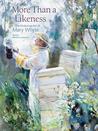 More Than a Likeness: The Enduring Art of Mary Whyte by Martha R. Severens
My rating: 3 of 5 stars
My "four stars" are more for the amazing ability the subject-Mary Whyte- has with water colors! Thank you Martha Severens for creating this beautiful volume celebrating her work! I loved reading about the artist and her choice of material to paint. You'll want to google her to see her work.
I'm putting this under PERSONAL DEVELOPMENT because my Associate Degree is in Art and still have aspirations. Art has been on the back burner for most of my adult life.
 The Majesty of Calmness by William George Jordan
My rating: 4 of 5 stars
Were it not for GOODREADS this little gem would never have crossed my radar. After finishing the 63 pages of a hand-sized edition (think Beatrix Potter to picture the size)borrowed through inter-library loan I looked up the author via wikipedia to find he was a contemporary with my great grandparents and his writings were influential during Teddy Roosevelt's terms of office. I am now curious to read them all. I'm thinking this particular collection of essays is a MUST OWN and is in fact part of the Project Gutenberg.
The essays included in this book are...
I. The Majesty of Calmness
II. Hurry, the Xcourge of America
III. The Power of Personal Influence
IV. The Dignity of Self-Reliance
V. Failure as a Success
VI. Doing Our Best at All Times
VII. The Royal Road to Happiness
I especially enjoyed his essay on HAPPINESS.
p.55 "Happiness has a number of understudies--gratification, satisfaction, content, and pleasure--clever imitators that simulate its appearance rather than emulate its method."
He goes on to briefly explain his observations of these "understudies". I particularly appreciated his exposure of "content" which we more often refer to as "contentment".
p.56 "Content is a greatly overrated virtue. It is a kind of diluted despair; it is the feeling with which we continue to accept substitutes, without striving for the realities. Content makes the trained individual swallow vinegar and try to smack his lips as if it were wine. Content enables one to warm his hands at the fire of a past joy that exists only in memory. Content is a mental and moral chloroform that deadens the activities of the individual to rise to higher planes of life and growth. Man should never be contented with anything less than the best efforts of his nature can possibly secure for him. Content makes the world more comfortable for the individual, but it is the death knell of progress. Man should be content with each step of progress merely as a station, discontented with is as a destination; contented with it as a step; discontented with it as a finality. There are times when a man should be content with what he HAS, but never with what he IS."
 Benjamin Franklin's the Art of Virtue: His Formula for Successful Living by Benjamin Franklin
My rating: 3 of 5 stars
Here's a peek at Franklin's self-made path to his own improvement and fleshed out with examples from his autobiography. The compiler of this little work was hard-pressed to expand it into something which can be loosely called a book. Even so, I found a few smakerels of pith amongst the marginally inaccessible vocabulary.
I enjoyed reading about how the idea of a lending library caught hold. I appreciated a glimpse of his little private club of twelve and how this club was responsible for the creation of more clubs which together spear-headed much needed civic improvements and modifications.
He was able to take criticism and addressed his character accordingly. For instance, when he was told he was "overbearing and rather insolent" he added a thirteenth virtue: HUMILITY. He addressed this error of his ways by amending his mode of expression. Rather than using words such as "certainly, undoubtedly, etc." he adopted the use of phrases such as "I conceive", "I apprehend", or "I imagine, a thing to be so or so; or it so appears to me at present". He goes on to say, "I soon found the advantage of this change in my manners; the conversations I engaged in went on more pleasantly. The modest way in which I proposed my opinions procured them a readier reception and less contradiction; I had less mortification when I was found to be in the wrong; and I more easily prevailed with others to give up their mistakes and join with me, when I happened to be in the right".
His list of twelve virtues (complete with his own definition of them) were tackled by him one per week with a ledger and tracking system of his own design. Temperance, Silence, Order, Resolution, Frugality, Industry, Sincerity, Justice, Moderation, Cleanliness, Tranquility, Chastity.
I found his thoughts on religion to be of interest. I hadn't known he was a vegetarian (and it's unclear whether or not this was a life-long choice). I had always heard he had skipped out on his indenturetude to his brother but I had never heard that they made amends and that he was able to fulfill that obligation by taking on his brother's son in turn.
I hadn't known that Franklin favored the practical education of women to fit them for business.
If I had my own copy of this it would be all marked up with highlights. Yes, I highly recommend it.
 The Charge: Activating the 10 Human Drives That Make You Feel Alive by Brendon Burchard
My rating: 3 of 5 stars
Lots of good ideas and writing prompts.
 Lessons from Madame Chic: 20 Stylish Secrets I Learned While Living in Paris by Jennifer L. Scott
My rating: 5 of 5 stars
readable
inspiring
practical
doable
entertaining
I like everything about this book -- its contents, its format, its size, everything. I read a library copy and now I'm going to acquire a copy for myself.
My dad once told me there are two thrills in life -- the thrill of recognition and the thrill of discovery. I found a lot of both in this little volume. I want to go through it again and annotate it with examples from my own life, experiences, and upbringing.
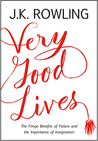 Very Good Lives: The Fringe Benefits of Failure and the Importance of Imagination by J.K. Rowling
My rating: 4 of 5 stars
The commencement address given by J.K. Rowling to the Harvard class of 2008 has made it into gift book format. The text is embellished by simple drawings -- usually red or black or a mix and sometimes a splash of gray -- which enhance the main thought of each paragraph. Definitely worth reading and I wouldn't mind owning a copy. (Graphically, this is a success, compared to Neil Gaiman's "Make Good Art" gift book which tends to busy and cluttered and the illustrations overwhelming or even detracting from the words).

No comments:
Post a Comment