I'm supposed to think of a person who really bugs or annoys me. Then I'm supposed to "mentally" send them someplace and I suppose this writing exercise is supposed to be my imagined postcard from them.
Dear Benefactor,
Thank you for making this vacation possible for me. I am enjoying a reprieve from my work and yes, even friends and family. I am catching up on reading and taking lots of walks. I enjoy feeling the sun and the smells of the vegetation and even the dirt. I enjoy meals at a nearby cafe`. I especially enjoy the spa treatments and planning what I want to accomplish in the coming season. I've even indulged in a new mix and match wardrobe complete with accessories with the spending money you provided.
Back to me and off the exercise, let me 'splain (as Ricky would say to Lucy).
I can't think of anyone who really bus or annoys me. That's not to say that's never been the case. But I have found praying for that person -- really praying FOR them, not what I want from them but what God wants for them -- has been the most helpful path for me. Then I realize that I may really bug or annoy someone and then I pray for forgiveness and look for ways of blessing others. My daughter tells me this is "turning out".
A long time ago I read aloud to my children a book by Frances Hodgson Burnett titled THE LOST PRINCE wherein I discovered the philosophy that whatever you wish on others you must be willing to pass through you first.
The place I sent my annoying person to is very like a retreat I took every August with my husband for a number of years.
I shared this exercise with two of my children and they observed that sometimes the ones that bug and annoy us the most are immediate family members and even ourselves. That puts an interesting spin on our choices.
The exercise concludes with this injunction: Take the next step -- Describe the ideal place to write. Be very specific and detailed. Go there in your mind the next time you write. See how your writing changes.
So I'll take myself to my retreat place and see what happens.
Monday, January 2, 2017

Saturday, December 31, 2016
Resolution Revolution -- Write-Brain Exercise 2
Instructions -- use each letter as you get to it. Start with...
NEW YEAR'S RESOLUTIONS MAKE ME...
Nervous. Have I thought carefully? Can I trust myself? Can I make
Every day count towards a
Wakening self?
Yes. Or at least I hope so. Will it be
Enough? I consider my dad's Pentagonal Man.
Awareness of all aspects of self,
Regardless of preferences, personality and past will help all
Sides of myself. I am a
Right-brained, yellow personality, Capricorn composit.
Eeek! I am the
Square peg that doesn't fit in the round hole.
Ouch! So, for me, resolutions need to include an element of
Laughter or fun!
Understand?!! Also, I work best
Tiptoeing around written resolves. It's almost like I need to
Inch my way towards the
Obviously secret wishes made when blowing out the candles.
Nice work! Give myself frequent pats on the back because no one else is going to.
NEW YEAR'S RESOLUTIONS MAKE ME...
Nervous. Have I thought carefully? Can I trust myself? Can I make
Every day count towards a
Wakening self?
Yes. Or at least I hope so. Will it be
Enough? I consider my dad's Pentagonal Man.
Awareness of all aspects of self,
Regardless of preferences, personality and past will help all
Sides of myself. I am a
Right-brained, yellow personality, Capricorn composit.
Eeek! I am the
Square peg that doesn't fit in the round hole.
Ouch! So, for me, resolutions need to include an element of
Laughter or fun!
Understand?!! Also, I work best
Tiptoeing around written resolves. It's almost like I need to
Inch my way towards the
Obviously secret wishes made when blowing out the candles.
Nice work! Give myself frequent pats on the back because no one else is going to.
Circle Game -- Write-Brain exercise 1
I was given three strings of five words and was instructed to circle a word in each string that appealed to me. My circled words were 'carousel', 'jambalaya', and 'oriole'. I was then instructed to use the words in a story beginning with the phrase ...
Sometimes I feel like a gerbil, (and then I could choose one of four versions which were: running round and round on a wheel / avoiding the wheel / fearful of leaving the wheel / runnng freely without need of a wheel) running round and round on a wheel.
Not that this is a bad thing. The exercise keeps me fit. If music is playing it feels like I'm dancing or starring in my own version of Chariots of Fire. If I'm listening to an audio book I get lost in the story. If I'm tying to memorize something it's easier -- to memorize, that is.
Sometimes it's like that character says in Porgy and Bess -- Sometimes I just sits and thinks and sometimes I just sits. Only for me it would be -- sometimes I just runs and thinks and sometimes I just runs.
My wheel is like a carousel -- going round and round and round. The difference being that a wheel requires action on my part and riding a carousel is a passive, relaxing, and in ways an other-worldly experience. The similarity being that both hold one captive.
What would it be like to be a bird, let's say a brilliantly hued and diminutive oriole? I could fly without boundaries. I could explore. I could play -- soar, dip, dive, circle, nest.
What would it be like to try new things, as simple as changing my go-to menu? What would I learn by trying new spices, new ingredients, new cultures? A good example would be 'jambalaya' which connotes, to me, a celebration of integrated cultures and besides, the very word sounds like a party.
How does one become a Jamabalaya Oriole Hamster? Do the wheel but also escape the cage, the rut, the boundaries at will and celebrate a more multi-faceted life!
So, action plan:
Define the components of the wheel that I want, that are necessary, but ditch what is dross.
Step out of my routines, push my limits, observe and take in new perspectives.
Embrace a fuller life experience by walking in the shoes of others through books, film, music, cooking, and most importantly service.
TURN OUT! This will be a year of turning out!
Sometimes I feel like a gerbil, (and then I could choose one of four versions which were: running round and round on a wheel / avoiding the wheel / fearful of leaving the wheel / runnng freely without need of a wheel) running round and round on a wheel.
Not that this is a bad thing. The exercise keeps me fit. If music is playing it feels like I'm dancing or starring in my own version of Chariots of Fire. If I'm listening to an audio book I get lost in the story. If I'm tying to memorize something it's easier -- to memorize, that is.
Sometimes it's like that character says in Porgy and Bess -- Sometimes I just sits and thinks and sometimes I just sits. Only for me it would be -- sometimes I just runs and thinks and sometimes I just runs.
My wheel is like a carousel -- going round and round and round. The difference being that a wheel requires action on my part and riding a carousel is a passive, relaxing, and in ways an other-worldly experience. The similarity being that both hold one captive.
What would it be like to be a bird, let's say a brilliantly hued and diminutive oriole? I could fly without boundaries. I could explore. I could play -- soar, dip, dive, circle, nest.
What would it be like to try new things, as simple as changing my go-to menu? What would I learn by trying new spices, new ingredients, new cultures? A good example would be 'jambalaya' which connotes, to me, a celebration of integrated cultures and besides, the very word sounds like a party.
How does one become a Jamabalaya Oriole Hamster? Do the wheel but also escape the cage, the rut, the boundaries at will and celebrate a more multi-faceted life!
So, action plan:
Define the components of the wheel that I want, that are necessary, but ditch what is dross.
Step out of my routines, push my limits, observe and take in new perspectives.
Embrace a fuller life experience by walking in the shoes of others through books, film, music, cooking, and most importantly service.
TURN OUT! This will be a year of turning out!
Time for New Year's Reshaping 2017 Style
I've collected some thoughts which I hope I can lay my hands on some time today or tomorrow. My 101 things to accomplish in 1001 days ended last July. I want to repeat some on a yearly basis. I mean, there's just so much you can do realistically. I love challenges, especially when there's a game element to them and recognition of any kind at the end.
One year I made ONE resolution. It was to touch each of my children in a gentle way every day. It was one of the best life changes I ever made. Another year I made ONE resolution. It was to have one sit down meal every day with the table fully set. It was another powerful life change. Many of the positive changes did not begin as resolutions. There was a year or two that we had daily morning family devotionals. There were many years where we read aloud from a novel every night. There were many years where we read scriptures together as a family daily, with each one of us taking a turn reading aloud.
This year I'd like to...
One year I made ONE resolution. It was to touch each of my children in a gentle way every day. It was one of the best life changes I ever made. Another year I made ONE resolution. It was to have one sit down meal every day with the table fully set. It was another powerful life change. Many of the positive changes did not begin as resolutions. There was a year or two that we had daily morning family devotionals. There were many years where we read aloud from a novel every night. There were many years where we read scriptures together as a family daily, with each one of us taking a turn reading aloud.
This year I'd like to...
- plow through my scrapbooking backlog.
- read at least ten books I already own
- tackle one cubby hole each month -- handling item and managing each
- do one craft project a month -- I've collected so many ideas
- edit my "Vivie", "Libby V.", and "Lib" stories and begin my "Vera" story.
- tackle my 'homeshool' albatross
- complete the "Write-Brain Workbook", which means I will be making 366 posts
So, here goes...
Monday, August 31, 2015
Read 100 Books -- 10 BIOGRAPHY
COMPLETE (and this is not counting the many excellent biographies I've read which are written for children during this 101 in 1001 Challenge).
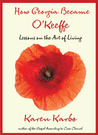 How Georgia Became O'Keeffe: Lessons on the Art of Living by Karen Karbo
My rating: 4 of 5 stars
Whoever thought that reading a biography could be such PuredeeLight?!! Okay, for those of us with Insatiable Curiosity (bordering on the Kipling 'Elephant's Child' kind), ALL biographies portend to be entertaining in some way. I'm dubbing Karbo the 'Dave Barry' of biography and now am scrambling to find all of her books,or at the very least, all her "kick-ass women" trilogy (as she calls them) to devour (metaphorically speaking, of course).
I confess, I'm one of those who savors EVERY aspect of a book. Silly, but I love the SIZE of this book (7.6 x 5.6), the weight of the paper, the fonts used, the use of colored type indicating the chapter segments, the full color images of one of Okeeffe's works at the beginning of each chapter (how to choose from the 2,045 of her lifetime output?), and all the delightful footnotes (many of which were no more than parenthetical remarks). Reading this book was akin to having a chat over lunch with the author, at once exploring and celebrating a most remarkable life and musing about our own lives and choices. Delectable.
Having said all that, I'm not sure that this book would strike the same chord with other women I know and respect. There is the occasional descriptively-used expletive, which neatly drives home the author's observations. It's a quick read about a voluminous life. The book is more of a 'whet-the-appetite' than a 'full-course-dinner' about the subject of the work. There is plenty written about Georgia O'Keeffe and Karbo includes this link to a full bibliography: www.okeeffemuseum.org . In addition, she shares her personal favorites in her Acknowledgments.
 God's Smuggler by Brother Andrew
My rating: 5 of 5 stars
There is so much to learn of faith in this account of one man's commitment to his faith in Jesus Christ. (hence my rare 5-star rating)
I listened to the audio edition while commuting to and from work but now feel I actually owned a very tattered copy of this book years ago and gave it to my husband to read. He is a voracious reader and liked it very much. I wish I'd read it with him so we could have talked about it together.
 The Snow Queen's Daughter: My Life with Aspergers, a Tale from the Lost Generation by Charli Devnet
My rating: 3 of 5 stars
A gifted and articulate writer, Devnet's account of her life as an undiagnosed "aspie" reads like fiction.
Her chapters are titled: 1-The Snow Queen's Daughter, A True Story, 2-Morning of a Misfit, 3-The Kingdom of Frost, 4-Lost Girl at College, 5-The Toy Garden, 6-Imaginary Lovers, 7-Julio, 8-World of Strangers, 8-Fire Bicycle, 9-The Sorcerer's Apprentice, and 10-Redemption of an Outcast
Anyone with an interest in "Aspberger's Syndrome" may find something of interest in her story. Yet it is engaging enough for any and all to read. It is full of the stuff of families, choices, triumphs, confusion, mistakes, pain, and hope. Just about anyone is going to interact with an "aspie" -- as teacher, boss, co-worker, neighbor, client, etc. The author's purpose in her often painful disclosures is to offer help in self-understanding as well as help in living in a world peopled with others whose brains are simply wired differently than "neuro-typicals".
A few sample passages:
p.76 (her thoughts about corporate employment)...
"My entire life would be like high school without the possibility of parole. Here you would not graduate in a few years. You would be trapped in this ice palace until you turned sixty five and, to my adolescent eyes, ready for either a nursing home or the graveyard. College was seen as the prerequisite to such a career.
Perhaps that is why I entered into it with such a bad attitude.
I wonder how someone as well read as I could have been so blind. People work in zoos, on ranches, in theatres, on boats, in small boutiques. Some have jobs in historic house museums as I do today. Others become wedding photograpers or D.J.s and spend their life attending parties even if they do not have friends to invite them. A little guidance might have spared me from wasting what should have been my most productive years vainly trying to hammer a square peg into a round hole. It would have been better to search for a square hole."
p.78 (thoughts prompted from attending law school)...
"If a brilliant legal mind was all that was needed for success in law; I would be sitting on the Supreme Court right now rather than scratching out a living from several part-time jobs. Unfortunately, there is also a certain decorum which is expected of lawyers as there is in all professions. One needs the skill to maneuver through the 'old-boy's network' that is the legal community and a successful attorney must act the part. After all, it serves one not at all to write the most scintillating well-reasoned brief since Oliver Wendell Holmes, if you alienate judge and jury by acting too eccentric."
p.80 (more thoughts prompted from attending law school)...
Law school was an actual challenge. It was then I realized that school was not just a place to be warehoused when you were too young for the real world or otherwise unfit. You could actually get an education there. Memorizing names, dates, places and facts always came too easy for me, but now a little extra was required of me."
p.80 (a sample thought from attending law school tossed in)...
"A recent Supreme Court appointee was asked by a senator that, if the federal government could require one to purchase health insurance under the Commerce Clause, could it also force us to buy broccoli? Those sorts of questions are discussed in law school, and some heavy-duty thinking is necessary to come up with a logical answer."
p.91 (on the brink of suicide she approaches a priest for counsel and guidance and his indifference could have been catastrophic)...
"Understand, this was a bad priest, far worse than the priests who molested the little altar boys. God can bestow His grace upon sinners and turn them into saints, but a bucket of luke-warm water goes down the drain. As any true Christian knows, the most deadly sin of all is indifference. It's called 'sloth'. "Sloth' means more than laziness; it means failure to act when actions are called for. Had I indeed walked out into the sea, as I was very close to doing, my death would hav been upon his head."
 A Place to Stand by Jimmy Santiago Baca
My rating: 5 of 5 stars
From the prologue the reader knows that the story of Jimmy Baca will not be a happy one, yet there is a hint of hope and purpose. From the first sentence you are drawn into Jimmy's world...
"I was five years old the first time I ever set foot in prison."
Ultimately he tells a story of redemption, but first you journey with him and his people a veritable "trail of tears" -- pain, injustice, abuse, , passion, mercy, betrayal, friendship. Like Gandhi, Mandela, and Malamud's "Fixer", Baca's choices set him apart and demanded attention. His is another testament to the power of literature to heal and re-direct lives. No doubt he was born with the poet's heart, mind, and perception -- but words were the only way to manifest them.
This autobiographical work includes some of his poems, which are powerfully evocative. He never got to attend "GED" classes -- a privilege which was withheld from him. He was virtually illiterate as a twenty-year-old. He laboriously self-taught himself to read and write. It is remarkable that quality literature fell into his hands. He became better read than most youth who graduate from high school and college today.
I recommend this book to any and all. It is full of heart. It would never have crossed my radar were it not for a book-group.
Excerpts follow:
At the tender age of seven he was put in the care of nuns at a boy's home and by his teens he was a detention center resident. He shares..."It was at the detention center that I first came in contact with boys who were already well on their way to becoming criminals; whose friendship taught me I was more like them than like the boys outside the cells, living in a society that would never accept me, in a world made of parents, nice clothes, and loving care. You could see the narrowing of life's possibilities in the cold, challenging eyes of the homeboys in the detention center; you could see the numbing of their hearts in their swaggering postures. All of them had been wounded, hurt, abused, ignored; already, aggression was in their talk, in the way they let off steam over their disappointments, in the way they expressed themselves. It was all they allowed themselves to express, for each of them knew they could be hurt again if they tried anything different. So instead they refined what they did know to its own kind of perfection." page 32
Much later (page 152) he shares..."Had I been able to share my feelings that moment, I would have said what I was able to add years later, lying on my cot in an isolation cell in total darkness. I would have said I felt the many lives that had come before me, the wind carrying within the vast space of the range, and all that lived in the range--cows, grass, insects-but something deeper. Old women leaving their windows open so the breeze can pass through the rooms, blessing the walls, chasing away evil spirits, anointing floors, beds, and clothing with its tepid hand. The breeze excites larks to jackknife over the park pond, knocks on doors to ask people to remember their ancestors, peels paint off trucks and scrapes rust from windmill blades and withers young shoots of alfalfa, cleans what it touches and brings age and emptiness to dirt roads. This breeze blows on my brow sometimes when I'm on the prairie, and I feel immortal; it whispers, Better times will come, and I believe my dreams will come true. The breeze chases the young heels of children and pulls at little girls' ponytails, draws red happiness out from their hearts and pools it in their cold cheeks, scruffs youth up, tugs at old women's long-sleeved bereavement dresses, sweeps away veils and handkerchiefs and dries their tears. It roars up from canyons, whistles from caves, blows fountains of green leaves across the air, loosens shale from cliffs, tears cottonwood pods, and bursts them to release fluffy cotton that sails past puffs of chimney smoke."
Later he observes (page 239)..."Language was opening me up in ways I couldn't explain and I assumed it was part of the apprenticeship of a poet. I culled poetry from odors, sounds, faces, and ordinary events occurring around me. Breezes bulged me as if I were cloth; sounds nicked their marks on my nerves; objects made impressions on my sight as if in clay. There, in the soft lightning of language, life entered and ground itself in me and I was flowing with the grain of the universe. Language placed my life experiences in a new context, freeing me for the moment to become with air as air, with clouds as clouds, from which new associations arose to engage me in present life in a more purposeful way."
On page 243..."After packing, I waited on my bunk, thinking of my cell as a womb from which I was repeatedly born into a person with greater and deeper convictions. I reflected on the challenges in understanding certain poets, on how I loved Neruda's work more and more, and Whitman's expansive celebrations of the common person. Russian writers wrote under oppression and gave me hope. My cell was my monastic refuge. Instead of closing in on me, shutting me off from life, and cannibalizing me, my cell was the place where I experienced the most abject grief, in which I yearned to the point of screaming for physical freedom. Through the barred cell window I saw lightning and thunder and rain and wind and sun and stars and moon that mercifully offered me reprieve from my loneliness. There I dreamed and kept intact my desires for live and family and freedom."
On page 244..."In this cell, meditative hours spent in solitary writing and reading broke old molds, leaving me distraught and empty and forcing me further out on the edge for answers to my questions and pain. Psychic wounds don't come in the form of knives, blades, guns, clubs; they arrive in the form of boxes--boxes in trucks, under beds, in my apartment when I could no longer pay the rent and had to move. Still, I was comforted by the thought that I was bigger than my box. I was what mattered, not the box. I lived OUT of a box, not in one. I was a witness, not a victim. I was a witness for those who for one reason or another would never have a place of their own, would never have the opportunity to make their lives stable enough because resources weren't available or because they just could not get it together. My job was to witness and record the "it" of their lives, to celebrate those who don't have a place in this world to stand and call home. For those p eople, my journals, poems, and writings are home. My pen and heart chronicle their hopes, doubts, regrets, loves, despairs, and dreams. I do this partly out of selfishness, because it helps to heal my own impermanence, my own despair. My role as witness is to give voice to the voiceless and hope to the hopeless, of which I am one."
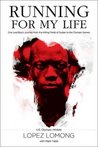 Running for My Life: One Lost Boy's Journey from the Killing Fields of Sudan to the Olympic Games by Lopez Lomong
My rating: 5 of 5 stars
I was hooked from the first sentence.
Lopepe Lopez Lomong tells his story of being torn from his mother's arms at age 6 by Sudanese rebel soldiers and taken to their camp where he surely would have perished if three teenage captives had not carried him to freedom in a daring nighttime escape. The four of them ran for their lives for three days, only to encounter soldiers at the border of Kenya who took them to a refugee camp.
Lopepe tells how he survived the camp and more, so much more. What is remarkable about him and his story is his faith and optimism. He entertains and inspires. For me this was a ten-hankie book -- but the tears I shed were because he grew my heart several sizes. In a word, he is indefatigable.
He rose above insurmountable odds, even carrying the U.S. flag in the 2008 Olympics in Beijing, China. Everything he does is for others -- to make a difference.
http://www.lopezlomong.com/
http://en.wikipedia.org/wiki/Lopez_Lo...
https://www.facebook.com/LopezLomong
http://edition.cnn.com/2012/08/06/spo...
http://edition.cnn.com/2012/08/06/spo...
This book is so good that my daughter wouldn't give it back to me so I could finish it until she had finished it. :)
 Dune Child by Ella Thorp Ellis
My rating: 3 of 5 stars
Ellis pens a fascinating first person account of growing up in an artist colony during the Great Depression of the 1930's.
 Garlic and Sapphires by Ruth Reichl
My rating: 3 of 5 stars
Ruth's account of being the restaurant reviewer for the New York Times is engaging from the very first sentence. Anyone who loves food is going to love this book. I mean, she has the gift for describing food in such a way that you want to stampede to said place and order a plate.
The challenge she has is being able to give a review of a place where she is recognized instantly and all stops are pulled to give her the best possible service and servings. Her solution? She goes in disguise.
Much of the fun of the story is hearing about the different personas she creates and how she becomes them. You enjoy all the 'supporting cast' as well.
I've never been to New York. I will probably never dine at any of these places. I am not daring in my menu choices. But I can experience this all vicariously through her account.
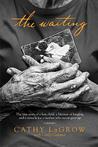 The Waiting: The True Story of a Lost Child, a Lifetime of Longing, and a Miracle for a Mother Who Never Gave Up by Cathy LaGrow
My rating: 4 of 5 stars
Anyone who has or who knows someone who has given up a baby to adoption or who has adopted a child is sure to be deeply moved by Minka's story. This is a story filled with faith, forgiveness, love, perseverance, charity, determination and most of all hope.
Minka, whose story it is, was raised by her Dutch mother and German step-father. My mother, too, was raised by a Dutch mother. Reading of her upbringing elicited from me many "aha!" moments as light was shed on how affection was or was not shared in such households.
I would love to create such a personal history of my own mother's life journey. There were many times I thought I could juxtapose my mother's account into this one--certainly not Minka's details, but the time period covered very nearly mirrors my mother's.
 The Color of Water: A Black Man's Tribute to His White Mother by James McBride
My rating: 3 of 5 stars
In alternating chapters the reader/listener steps into the shoes of the eighth of twelve children and his mother.
She was the daughter of Jewish parents, raised in the south, unhappy and abused and overworked and ostrasized by her peers. Her story takes her to New York and Christianity and marriage to a remarkable man who happened also to be black. He rescued her from a downward spiral which would have ended in prostitution.
The son's story was one of confusion, searching for identity, piecing together the awakening of black pride and righting of generational wrongs.
The title is the mother's description of God. All her children received university degrees, her husband established a congregation, and she overcame the loss of two husbands.
The book is filled with understanding and hope and struggle and ultimately peace. Well worth the time spent in reading or listening.
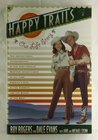 HAPPY TRAILS: Our Life Story by Roy Rogers
My rating: 4 of 5 stars
This iconic couple have now nearly faded completely out of memory, while in their heyday they were public favorites and even rated hero status -- right up there with Abe Lincoln and FDR.
I gained a great appreciation for both of them, especially Roy Rogers, as I read their life stories (shared in his, hers, and ours alternating chapters). It is good for someone like me who has grown up in comfort and privilege to see the price paid by the generation or two before me.
For instance, Roy's mother had polio (it was then called the "white Swelling") at the age of two and was crippled for life. She had to bend down and hold her weak leg tight around the knee for support. And yet she married and raised four children. Roy's father's brother was blind and yet he helped build a make-shift boat to transport him and Roy's family by river to carve out a life in Portsmouth, Ohio. Later the family was among the many to load all their belongings into their rickety vehicle and go to California. They found little work and much hardship there but the weather was better.
Dale Evans, who became Roy's wife, began life in Texas and became a mother herself at the tender age of 15.
Both Dale and Roy worked their way into stardom and that alone makes for a fascinating story of the studios of the day. However, as a couple they chose to adopt children and also chose to bring their own Downs Syndrome baby home rather than institutionalize her as was the practice of the day. Their story is truly inspirational. They took their roles as heroes to young people to heart and behaved both on and off set with their young enthusiasts in mind.
How Georgia Became O'Keeffe: Lessons on the Art of Living by Karen KarboMy rating: 4 of 5 stars
Whoever thought that reading a biography could be such PuredeeLight?!! Okay, for those of us with Insatiable Curiosity (bordering on the Kipling 'Elephant's Child' kind), ALL biographies portend to be entertaining in some way. I'm dubbing Karbo the 'Dave Barry' of biography and now am scrambling to find all of her books,or at the very least, all her "kick-ass women" trilogy (as she calls them) to devour (metaphorically speaking, of course).
I confess, I'm one of those who savors EVERY aspect of a book. Silly, but I love the SIZE of this book (7.6 x 5.6), the weight of the paper, the fonts used, the use of colored type indicating the chapter segments, the full color images of one of Okeeffe's works at the beginning of each chapter (how to choose from the 2,045 of her lifetime output?), and all the delightful footnotes (many of which were no more than parenthetical remarks). Reading this book was akin to having a chat over lunch with the author, at once exploring and celebrating a most remarkable life and musing about our own lives and choices. Delectable.
Having said all that, I'm not sure that this book would strike the same chord with other women I know and respect. There is the occasional descriptively-used expletive, which neatly drives home the author's observations. It's a quick read about a voluminous life. The book is more of a 'whet-the-appetite' than a 'full-course-dinner' about the subject of the work. There is plenty written about Georgia O'Keeffe and Karbo includes this link to a full bibliography: www.okeeffemuseum.org . In addition, she shares her personal favorites in her Acknowledgments.
God's Smuggler by Brother AndrewMy rating: 5 of 5 stars
There is so much to learn of faith in this account of one man's commitment to his faith in Jesus Christ. (hence my rare 5-star rating)
I listened to the audio edition while commuting to and from work but now feel I actually owned a very tattered copy of this book years ago and gave it to my husband to read. He is a voracious reader and liked it very much. I wish I'd read it with him so we could have talked about it together.
The Snow Queen's Daughter: My Life with Aspergers, a Tale from the Lost Generation by Charli DevnetMy rating: 3 of 5 stars
A gifted and articulate writer, Devnet's account of her life as an undiagnosed "aspie" reads like fiction.
Her chapters are titled: 1-The Snow Queen's Daughter, A True Story, 2-Morning of a Misfit, 3-The Kingdom of Frost, 4-Lost Girl at College, 5-The Toy Garden, 6-Imaginary Lovers, 7-Julio, 8-World of Strangers, 8-Fire Bicycle, 9-The Sorcerer's Apprentice, and 10-Redemption of an Outcast
Anyone with an interest in "Aspberger's Syndrome" may find something of interest in her story. Yet it is engaging enough for any and all to read. It is full of the stuff of families, choices, triumphs, confusion, mistakes, pain, and hope. Just about anyone is going to interact with an "aspie" -- as teacher, boss, co-worker, neighbor, client, etc. The author's purpose in her often painful disclosures is to offer help in self-understanding as well as help in living in a world peopled with others whose brains are simply wired differently than "neuro-typicals".
A few sample passages:
p.76 (her thoughts about corporate employment)...
"My entire life would be like high school without the possibility of parole. Here you would not graduate in a few years. You would be trapped in this ice palace until you turned sixty five and, to my adolescent eyes, ready for either a nursing home or the graveyard. College was seen as the prerequisite to such a career.
Perhaps that is why I entered into it with such a bad attitude.
I wonder how someone as well read as I could have been so blind. People work in zoos, on ranches, in theatres, on boats, in small boutiques. Some have jobs in historic house museums as I do today. Others become wedding photograpers or D.J.s and spend their life attending parties even if they do not have friends to invite them. A little guidance might have spared me from wasting what should have been my most productive years vainly trying to hammer a square peg into a round hole. It would have been better to search for a square hole."
p.78 (thoughts prompted from attending law school)...
"If a brilliant legal mind was all that was needed for success in law; I would be sitting on the Supreme Court right now rather than scratching out a living from several part-time jobs. Unfortunately, there is also a certain decorum which is expected of lawyers as there is in all professions. One needs the skill to maneuver through the 'old-boy's network' that is the legal community and a successful attorney must act the part. After all, it serves one not at all to write the most scintillating well-reasoned brief since Oliver Wendell Holmes, if you alienate judge and jury by acting too eccentric."
p.80 (more thoughts prompted from attending law school)...
Law school was an actual challenge. It was then I realized that school was not just a place to be warehoused when you were too young for the real world or otherwise unfit. You could actually get an education there. Memorizing names, dates, places and facts always came too easy for me, but now a little extra was required of me."
p.80 (a sample thought from attending law school tossed in)...
"A recent Supreme Court appointee was asked by a senator that, if the federal government could require one to purchase health insurance under the Commerce Clause, could it also force us to buy broccoli? Those sorts of questions are discussed in law school, and some heavy-duty thinking is necessary to come up with a logical answer."
p.91 (on the brink of suicide she approaches a priest for counsel and guidance and his indifference could have been catastrophic)...
"Understand, this was a bad priest, far worse than the priests who molested the little altar boys. God can bestow His grace upon sinners and turn them into saints, but a bucket of luke-warm water goes down the drain. As any true Christian knows, the most deadly sin of all is indifference. It's called 'sloth'. "Sloth' means more than laziness; it means failure to act when actions are called for. Had I indeed walked out into the sea, as I was very close to doing, my death would hav been upon his head."
A Place to Stand by Jimmy Santiago BacaMy rating: 5 of 5 stars
From the prologue the reader knows that the story of Jimmy Baca will not be a happy one, yet there is a hint of hope and purpose. From the first sentence you are drawn into Jimmy's world...
"I was five years old the first time I ever set foot in prison."
Ultimately he tells a story of redemption, but first you journey with him and his people a veritable "trail of tears" -- pain, injustice, abuse, , passion, mercy, betrayal, friendship. Like Gandhi, Mandela, and Malamud's "Fixer", Baca's choices set him apart and demanded attention. His is another testament to the power of literature to heal and re-direct lives. No doubt he was born with the poet's heart, mind, and perception -- but words were the only way to manifest them.
This autobiographical work includes some of his poems, which are powerfully evocative. He never got to attend "GED" classes -- a privilege which was withheld from him. He was virtually illiterate as a twenty-year-old. He laboriously self-taught himself to read and write. It is remarkable that quality literature fell into his hands. He became better read than most youth who graduate from high school and college today.
I recommend this book to any and all. It is full of heart. It would never have crossed my radar were it not for a book-group.
Excerpts follow:
At the tender age of seven he was put in the care of nuns at a boy's home and by his teens he was a detention center resident. He shares..."It was at the detention center that I first came in contact with boys who were already well on their way to becoming criminals; whose friendship taught me I was more like them than like the boys outside the cells, living in a society that would never accept me, in a world made of parents, nice clothes, and loving care. You could see the narrowing of life's possibilities in the cold, challenging eyes of the homeboys in the detention center; you could see the numbing of their hearts in their swaggering postures. All of them had been wounded, hurt, abused, ignored; already, aggression was in their talk, in the way they let off steam over their disappointments, in the way they expressed themselves. It was all they allowed themselves to express, for each of them knew they could be hurt again if they tried anything different. So instead they refined what they did know to its own kind of perfection." page 32
Much later (page 152) he shares..."Had I been able to share my feelings that moment, I would have said what I was able to add years later, lying on my cot in an isolation cell in total darkness. I would have said I felt the many lives that had come before me, the wind carrying within the vast space of the range, and all that lived in the range--cows, grass, insects-but something deeper. Old women leaving their windows open so the breeze can pass through the rooms, blessing the walls, chasing away evil spirits, anointing floors, beds, and clothing with its tepid hand. The breeze excites larks to jackknife over the park pond, knocks on doors to ask people to remember their ancestors, peels paint off trucks and scrapes rust from windmill blades and withers young shoots of alfalfa, cleans what it touches and brings age and emptiness to dirt roads. This breeze blows on my brow sometimes when I'm on the prairie, and I feel immortal; it whispers, Better times will come, and I believe my dreams will come true. The breeze chases the young heels of children and pulls at little girls' ponytails, draws red happiness out from their hearts and pools it in their cold cheeks, scruffs youth up, tugs at old women's long-sleeved bereavement dresses, sweeps away veils and handkerchiefs and dries their tears. It roars up from canyons, whistles from caves, blows fountains of green leaves across the air, loosens shale from cliffs, tears cottonwood pods, and bursts them to release fluffy cotton that sails past puffs of chimney smoke."
Later he observes (page 239)..."Language was opening me up in ways I couldn't explain and I assumed it was part of the apprenticeship of a poet. I culled poetry from odors, sounds, faces, and ordinary events occurring around me. Breezes bulged me as if I were cloth; sounds nicked their marks on my nerves; objects made impressions on my sight as if in clay. There, in the soft lightning of language, life entered and ground itself in me and I was flowing with the grain of the universe. Language placed my life experiences in a new context, freeing me for the moment to become with air as air, with clouds as clouds, from which new associations arose to engage me in present life in a more purposeful way."
On page 243..."After packing, I waited on my bunk, thinking of my cell as a womb from which I was repeatedly born into a person with greater and deeper convictions. I reflected on the challenges in understanding certain poets, on how I loved Neruda's work more and more, and Whitman's expansive celebrations of the common person. Russian writers wrote under oppression and gave me hope. My cell was my monastic refuge. Instead of closing in on me, shutting me off from life, and cannibalizing me, my cell was the place where I experienced the most abject grief, in which I yearned to the point of screaming for physical freedom. Through the barred cell window I saw lightning and thunder and rain and wind and sun and stars and moon that mercifully offered me reprieve from my loneliness. There I dreamed and kept intact my desires for live and family and freedom."
On page 244..."In this cell, meditative hours spent in solitary writing and reading broke old molds, leaving me distraught and empty and forcing me further out on the edge for answers to my questions and pain. Psychic wounds don't come in the form of knives, blades, guns, clubs; they arrive in the form of boxes--boxes in trucks, under beds, in my apartment when I could no longer pay the rent and had to move. Still, I was comforted by the thought that I was bigger than my box. I was what mattered, not the box. I lived OUT of a box, not in one. I was a witness, not a victim. I was a witness for those who for one reason or another would never have a place of their own, would never have the opportunity to make their lives stable enough because resources weren't available or because they just could not get it together. My job was to witness and record the "it" of their lives, to celebrate those who don't have a place in this world to stand and call home. For those p eople, my journals, poems, and writings are home. My pen and heart chronicle their hopes, doubts, regrets, loves, despairs, and dreams. I do this partly out of selfishness, because it helps to heal my own impermanence, my own despair. My role as witness is to give voice to the voiceless and hope to the hopeless, of which I am one."
Running for My Life: One Lost Boy's Journey from the Killing Fields of Sudan to the Olympic Games by Lopez LomongMy rating: 5 of 5 stars
I was hooked from the first sentence.
Lopepe Lopez Lomong tells his story of being torn from his mother's arms at age 6 by Sudanese rebel soldiers and taken to their camp where he surely would have perished if three teenage captives had not carried him to freedom in a daring nighttime escape. The four of them ran for their lives for three days, only to encounter soldiers at the border of Kenya who took them to a refugee camp.
Lopepe tells how he survived the camp and more, so much more. What is remarkable about him and his story is his faith and optimism. He entertains and inspires. For me this was a ten-hankie book -- but the tears I shed were because he grew my heart several sizes. In a word, he is indefatigable.
He rose above insurmountable odds, even carrying the U.S. flag in the 2008 Olympics in Beijing, China. Everything he does is for others -- to make a difference.
http://www.lopezlomong.com/
http://en.wikipedia.org/wiki/Lopez_Lo...
https://www.facebook.com/LopezLomong
http://edition.cnn.com/2012/08/06/spo...
http://edition.cnn.com/2012/08/06/spo...
This book is so good that my daughter wouldn't give it back to me so I could finish it until she had finished it. :)
Dune Child by Ella Thorp EllisMy rating: 3 of 5 stars
Ellis pens a fascinating first person account of growing up in an artist colony during the Great Depression of the 1930's.
Garlic and Sapphires by Ruth ReichlMy rating: 3 of 5 stars
Ruth's account of being the restaurant reviewer for the New York Times is engaging from the very first sentence. Anyone who loves food is going to love this book. I mean, she has the gift for describing food in such a way that you want to stampede to said place and order a plate.
The challenge she has is being able to give a review of a place where she is recognized instantly and all stops are pulled to give her the best possible service and servings. Her solution? She goes in disguise.
Much of the fun of the story is hearing about the different personas she creates and how she becomes them. You enjoy all the 'supporting cast' as well.
I've never been to New York. I will probably never dine at any of these places. I am not daring in my menu choices. But I can experience this all vicariously through her account.
The Waiting: The True Story of a Lost Child, a Lifetime of Longing, and a Miracle for a Mother Who Never Gave Up by Cathy LaGrowMy rating: 4 of 5 stars
Anyone who has or who knows someone who has given up a baby to adoption or who has adopted a child is sure to be deeply moved by Minka's story. This is a story filled with faith, forgiveness, love, perseverance, charity, determination and most of all hope.
Minka, whose story it is, was raised by her Dutch mother and German step-father. My mother, too, was raised by a Dutch mother. Reading of her upbringing elicited from me many "aha!" moments as light was shed on how affection was or was not shared in such households.
I would love to create such a personal history of my own mother's life journey. There were many times I thought I could juxtapose my mother's account into this one--certainly not Minka's details, but the time period covered very nearly mirrors my mother's.
The Color of Water: A Black Man's Tribute to His White Mother by James McBrideMy rating: 3 of 5 stars
In alternating chapters the reader/listener steps into the shoes of the eighth of twelve children and his mother.
She was the daughter of Jewish parents, raised in the south, unhappy and abused and overworked and ostrasized by her peers. Her story takes her to New York and Christianity and marriage to a remarkable man who happened also to be black. He rescued her from a downward spiral which would have ended in prostitution.
The son's story was one of confusion, searching for identity, piecing together the awakening of black pride and righting of generational wrongs.
The title is the mother's description of God. All her children received university degrees, her husband established a congregation, and she overcame the loss of two husbands.
The book is filled with understanding and hope and struggle and ultimately peace. Well worth the time spent in reading or listening.
HAPPY TRAILS: Our Life Story by Roy RogersMy rating: 4 of 5 stars
This iconic couple have now nearly faded completely out of memory, while in their heyday they were public favorites and even rated hero status -- right up there with Abe Lincoln and FDR.
I gained a great appreciation for both of them, especially Roy Rogers, as I read their life stories (shared in his, hers, and ours alternating chapters). It is good for someone like me who has grown up in comfort and privilege to see the price paid by the generation or two before me.
For instance, Roy's mother had polio (it was then called the "white Swelling") at the age of two and was crippled for life. She had to bend down and hold her weak leg tight around the knee for support. And yet she married and raised four children. Roy's father's brother was blind and yet he helped build a make-shift boat to transport him and Roy's family by river to carve out a life in Portsmouth, Ohio. Later the family was among the many to load all their belongings into their rickety vehicle and go to California. They found little work and much hardship there but the weather was better.
Dale Evans, who became Roy's wife, began life in Texas and became a mother herself at the tender age of 15.
Both Dale and Roy worked their way into stardom and that alone makes for a fascinating story of the studios of the day. However, as a couple they chose to adopt children and also chose to bring their own Downs Syndrome baby home rather than institutionalize her as was the practice of the day. Their story is truly inspirational. They took their roles as heroes to young people to heart and behaved both on and off set with their young enthusiasts in mind.
Read 100 books -- 10 I OWN
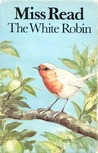 The White Robin by Miss Read
My rating: 2 of 5 stars
Despite my love of Miss Read's prose and her delightful line-drawing illustrations I feel let down with this little volume in which a teacher and class 'discover' and observe, even protect the comings and goings of an albino robin through the course of a year.
At peril of 'spoilers' I will restrain more description, other than to say that overall I didn't perceive a change in any of the characters.
I had picked this up at a library book sale years ago and finally read it. However, this one I found not to be a keeper. I returned it to another library book sale.
 Tuesdays at the Castle by Jessica Day George
My rating: 3 of 5 stars
What fun!
A Castle that takes charge. Really.
Royal siblings (delightfully named).
A tragic change in the course of events.
A malicious plot.
Who to trust? Who not to trust? What to do?
Teamwork, courage, ingenuity.
It's all here! And so cleverly executed.
I bought this at a library event -- the author was the speaker and she told her "road to getting published" story. My copy is autographed and is a "keeper".
Contact Lost by Leif HamreMy rating: 3 of 5 stars
A routine helicopter mission over the ice fields of Greenland goes dangerously off course. Even worse, there are now two extra lives at stake, in addition to the pilot's and the mechanic's.
Written before the YA genre found its footing, this story would still appeal to this group. I gave it to my husband to read the minute I put it down. It would be a great read-aloud for even upper elementary and middle school / jr. high age listeners. It would be nice if this were re-printed.
For some reason I thought this book which I'd plucked from a library book sale table years ago had a Christmas theme. So all these years I've packed it away with Christmas, unread. This year I decided to actually READ some of these books. Even though it turns out to not have anything to do with Christmas I'm glad to have read it.
I no longer own it, as I gave it to a family at my church who was visiting from Norway.
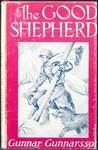 The Good Shepherd by Gunnar Gunnarsson
My rating: 3 of 5 stars
Every year for 27 years Benedikt has spent the week of Advent in the wilds of Iceland seeking out stray sheep with his trusty dog and bell-wether ram. This particular journey takes place the year that half his life has been devoted to this little service he renders, unbidden, to these lost sheep. He is delayed in his purpose by a man who has carelessly postponed his own sheep gathering til this time, knowing that Benedikt would come to his aid. Other obstacles present themselves and there are times that the outcome of this journey is on tenter-hooks.
This book has been packed away with my Christmas things year after year, unread. Finally this year it rose to the top and I find it is not a holiday story so much as a tale of personal mission. Benedikt again and again is faced with the choice--"stay with my purpose" or "render assistance where it is needed", all the while knowing that the innocent creatures he seeks may forfeit their lives due to these delays. Then too, Benedikt wonders if there will be one to pick up the baton, as it were, when he must needs lay it by.
This is a short book but would be a good family read-aloud, especially at the time of year in which it takes place.
The author was nominated for the Nobel prize in literature during his years of writing.
I no longer own this book because I gave it to a family visiting from Norway.
Read 100 books -- RE-READ 10 Books I've read before
 A Barrel of Laughs, a Vale of Tears by Jules Feiffer
My rating: 4 of 5 stars
Of the seven basic plots from which all stories are supposedly drawn (as I once heard said), I would say this one most closely follows the Sleeping Beauty epic. Although our hero, Prince Roger, is not given a fairy gift he IS born with a tragic flaw in a world where it seems all have a handicap to bear. His flaw? He was absolutely good-natured -- to the point that all in his presence were subject to fits of laughter. This simply would not do, so his father, King Whatchamacallit, consults J. Wellington Wizard for help. He prescribes a quest in which Roger must traverse the Forever Forest, the Dastardly Divide, the Valley of Vengeance, and assorted other hazardous places to do who knows what for who knows who.
Absolutely NOTHING goes according to plan.
There is plenty here to entertain -- humor, adventure, asides-to-the-reader, cartoonish illustrations, bad guys, good guys, and surprises aplenty. In fact, you may want to own a copy of your own (as I do).
For the mature reader there is ample food for thought. I found myself thinking about the many opposites that life deals and how they can all mesh together for good or for ill, depending on our choices and actions.
I could have put this either in the BOOKS I OWN post or this one. I have owned this one for years and my children all love it. I read it aloud to them years ago. One of my children memorized a few pages to fulfill a "monologue" school drama class assignment.
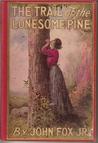 The Trail Of The Lonesome Pine by John Fox Jr.
My rating: 4 of 5 stars
This Cinderalla / Romeo & Juliet epic, set in Appalachia at the turn of the last century, is more than a winter/summer love story but is a love story of place as well. It is an exploration of human nature, the impact of environment on conduct, the power of education over ignorance, and even the dawn of the 'rule of law'.
I read this edition while summering at my grandfather's place so many years ago that there was really not much else to do than read and this was at hand. As a teenager I could wander about his little two acres which included two orchards, plenty of garden, raspberries, hollyhocks, lots of lawn, a chicken house, a barn, cows, pigs, rabbits in hutches, a clothesline, an outdoor privy, a wood-burning stove for cooking, no running water in the house, a little store within walking distance, trees to climb and hide in, irrigation ditches. It was a simple matter to throw myself into reading in the cool of the house when the fascination of board games with cousins wore off and my only company was younger sisters who held no interest for me. I loved this book.
And now, after all these years I've read it again. I don't love stories now as I did then. But I can appreciate the panoramic proportions more. My own grandmother was 14 years younger than my grandfather and reading this gives me a glimpse of how their romance may have unfolded over the years. Our society has ridden the rail of industrialization (industrial EVERYTHING -- education, medicine, farming, etc) and is hearkening back to the roots of simpler times. Full circle.
I could have put this one in the BOOKS I OWN category as I actually own two copies.
 The Adventures of Huckleberry Finn by Mark Twain
My rating: 4 of 5 stars
So glad to have had a reason to re-visit this by reading it aloud to my teen to fulfill an English assignment. Having said that, I can see why there is some controversy about it in today's politically correct conversation mode. I think people don't comprehend how the author was pricking the conscience of his contemporaries -- asking the hard but obvious questions and doing so in such a way that the whole English-speaking world came on board that little raft-world with Huck and Jim. It is refreshing to me to read a book where the characters speak and behave just as they would have in their particular time and place.
Twain certainly loved poking fun at the classics of his time, as evidenced by the exasperating way in which Jim was liberated by two well-meaning boys. I finally fell into the spirit of the story and found myself laughing so hard I could barely get through a paragraph, there towards the end.
Huck's journey can be mapped into the "Storymind" hero's journey, as presented by Tracy and Laura Hickman at an event I once attended. However, I leave that exercise for another day.
On a side note, I found Jim's observations on Solomon and the baby claimed by two mothers to be foot stomping funny. I could hardly get through it, I was laughing so hard.
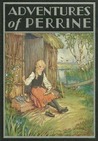 The Adventures of Perrine by Hector Malot
My rating: 3 of 5 stars
This is one of the treasures I found on my grandfather's bookshelves during one of the many idle summer days I spent there as a teenager. I absolutely LOVED this book and even wrote to Disney that it needed to be made into a movie.
I finally subscribed to my library's inter-library loan service for a copy to read to my teenage daughter. Reading it together we felt it was a mash-up of Hugo's "Les Miserables", Dicken's "Oliver Twist", Burnett's "Little Lord Fauntleroy", and even Twain's "Huckleberry Finn".
Juxtaposed over the many well-written novels I have read in the ensuing years and am now a more sophisticated reader it did not earn the five stars I would have given it when I first read it. However, a quick look at Amazon revealed that this 1932 novel by French author Malot is collectible, anywhere from $33 for a paperback reprint up to $2400 for a first edition!
As the story opens Perrine and her mother approach the city of Paris in their little dilapidated "van" pulled by a beloved pet donkey. They are very low on funds and their traveling photography business can no longer earn them revenue as they have no paper or chemicals. The mother is very ill. The reader distrusts all who advise them, suspecting them easy prey for predatory people. The worst happens--the mother dies, leaving young 10,11,or 12-year old Perrine only her parent's marriage certificate, a map, and the little money left over from the sale of the van and the donkey. Her last wish is that Perrine proceed north to the village of her dead father's family.
This Perrine does at great peril, experiencing abuse and hardship along the way but ever staying true to her character and her objective. Perrine also receives kindness and friendship. Perrine's ingenuity and independent spirit are indefatigable. Through her eyes the reader learns of social injustices of the time and tangles with unscrupulous business practices.
Happy tears were shed as we completed the story.
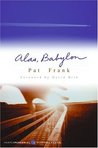 Alas, Babylon by Pat Frank
My rating: 4 of 5 stars
Frank's sobering "alternate history" exploring the possible aftermath of a nuclear holocaust has become a classic of its genre. It predates the film "Fail-safe" and its satire "Dr. Strangelove". It predates the Cuban Missile Crisis.
Randy Bragg, thirty-something, unmarried and unemployed is idling away his life in Fort Repose, the Florida back-water community where he grew up. His brother, a high ranking Air Force officer, informs Randy that he is sending his wife and children "home" in hopes that there they might survive an impending Soviet nuclear attack.
The story, lyrically written and presented without sentimentality, explores how an individual, a neighborhood, a community, and the nation might respond to such an adverse reality.
I gave this four stars because it changed my life. I read it as a teenager and selected my career based on this story. I can recommend the audio edition which is superbly performed.
After perusing a few of the reader reviews I feel compelled to add that the character Randy Bragg was politically forward-looking. At the time this book was written the Civil Rights Movement (as it came to be known) was in its infancy. Randy lost a local election because he was in favor of integration. Their "negro" (the term in use at the time this book was written) neighbors were actually MORE prepared to face the challenges imposed upon them because they had not yet become dependent upon all the modern innovations. They became key players in the survival of the neighborhood and community. The author recognized the wide schism of education and political acumen among various members of any community.
Randy was a flawed character and that is part of what makes his journey pertinent to any reader. Through Randy the author exposes and challenges the stereotypes and deeply held prejudices of that time and place. The re-shaping of Fort Repose's society received a jump-start as a result of the nuclear devastation. So, in a way, Frank was asking, "Why wait for disaster to make positive changes?" As in Harper Lee's "To Kill a Mockingbird" author Pat Frank was holding a looking glass up to each reader for some crucial self-examination. People of all races, creeds, and genders deserve our respect. Through his characters he invited the reader to ask, at the end of the day where do I put my faith? In what do I trust? When there are no rules how do I behave? How resilient, creative, charitable am I.
 Mastering the Seven Decisions That Determine Personal Success: An Owner's Manual to the New York Times Bestseller, the Traveler's Gift by Andy Andrews
My rating: 5 of 5 stars
After listening to Andrews' book Mastering the Seven Decisions That Determine Personal Success I am hooked on this author. In fact, this became a "MUST OWN THIS"! for me and I gave them as gifts at Christmas to everyone in my family. Very inspiring!
Just listened to this a second time in twice as many years. I'm thinking a once-a-month, or perhaps once a quarter and certainly at least once a year would be a good prescription for me. He includes affirmations with each category.
The Responsible Decision
The Guided (informed) Decision
The Active Decision
and so forth...
post script -- I posted this review Nov. 2009 and just re-listened to in June 2015. My how time does fly. And yes, I need to now get my hands on the book and do the suggested writing exercises.
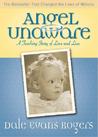 Angel Unaware: A Touching Story of Love and Loss by Dale Evans Rogers
My rating: 4 of 5 stars
This is a first-person narrative from the child's point of view but as told by the mother as she imagines it what it was like as her almost two-year old daughter reported to a Heavenly Father the impact her short time on earth had on the lives of others.
Her life actually did impact many lives -- first of all her parents, the famous Roy Rogers and Dale Evans, who chose to take their downs syndrome baby home and love her rather than institutionalize her right away as they were advised.
Due to their fame, they were able by their example to help other parents not be ashamed of their special needs children. The proceeds from this book went to helping the cause of handicapped children. Who can say how much this couple and this child did to change the way these children were thought of and treated.
https://www.youtube.com/watch?v=eX2j_...
Subscribe to:
Posts (Atom)